|
|
|
Theory of !resonances is an active management framework that transforms |
reactive response to the event flow into its predictive analysis and proactive regulation.
|
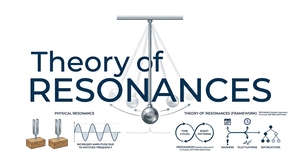 |
Theory of !resonances is a paradigm that allows us to view the surrounding !reality through the lens of cyclicity and repeatability of event patterns.
Key tenets and basic tools of the theory of !resonances (t!r) are presented on this resource, designed for an initial introduction to the concept.
|
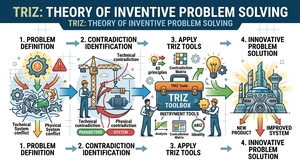 |
TRIZ is a methodology for the effective solution of complex engineering and business tasks under conditions of uncertainty. TRIZ tools
help to break out of a logical impasse by activating dormant neural
networks in the brain and using non-standard problem reformulation. |
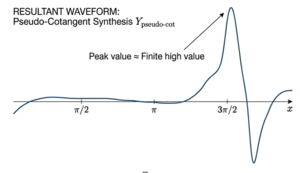 |
Synchronicity and Nonlinear Resonance of the Event Flow
Never before, and here it is
again. Why do the same events, breakdowns, and conflict situations
repeat? Tools for working with nonlinear social !resonances with external synchronization.
|
 |
An aLLM bot is one of the tools
of the theory of !resonances. The model relies not only on text
approximation, but also on searching for optimal paths to realize the
event !flow.
|
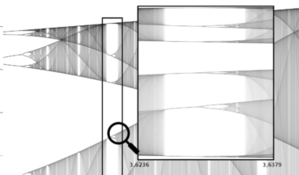 |
Cascade of !fluctuations and the Feigenbaum Tree
When forecasting potential
disasters, we do not need to calculate millions of chaotic options.
Instead of sifting through the entire "cloud" of possible states, we
compute only "where necessary."
|
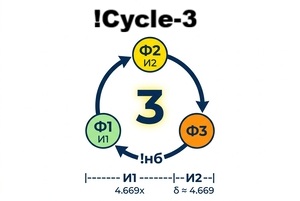 |
Cycle-3 (analogous to the OODA loop) as Applied to the Theory of !resonances
Consists of three phases: !fluctuation → Le Chatelier → !nonlinear bifurcation.
The duration of Cycle-3
is variable and depends on the density of event !flows in the current
!time slot — the process can take anywhere from a few hours to
several weeks.
|
© 2026 trallm.io
Published on Sep 24, 2026 |
|
|
Who Needs This Resource and Why
-
Analytics and Product Development
-
Why: Identifying hidden cycles in user behavior, activity peaks, and market fluctuations.
-
Result:
Predictive capabilities under conditions of incomplete data and
transitioning from reactive response after the fact to proactive
modeling.
-
Systems Architecture and Engineering
-
Why: Searching for non-standard engineering solutions and forecasting system behavior under extreme loads.
-
Result: Fast escape from impasses and designing resilient architectures with protection against cascading failures.
-
Risk Management and Compliance
-
Emergency Forecasting and Incident Monitoring
-
Why: Assessing the probability of complex technological and natural failures when multiple factors coincide.
-
Result: Determining periods of increased risk density and reducing damage through timely preparation.
-
Applied Research and Optimization
-
Why: Analyzing complex computational models and nonlinear processes.
-
Result:
Reduction of computations, identification of fractal patterns, and
discovering connections between external factors and group dynamics.
-
Strategic Management and Crisis Management
-
Why: Decision-making under high uncertainty and external environmental pressure.
-
Result:
Escaping stalemate situations, maintaining control during crises, and
shifting the project development vector onto a stable trajectory.
|
Privacy Policy
|
|
